Is there part of you that really, really wants to take a
quantum leap and become a speaker, but the other part of you is
afraid you won’t succeed? Because of this, we don't take risks,
we don't pursue our dreams of becoming a speaker. We play it
safe and play it small in life. We call this the “Fear Factor”!
The way to break through the Fear Factor is to be willing to
stretch yourself and step outside your comfort zone. It may be
uncomfortable at first but understand that's only temporary.
You're stepping into new and unfamiliar territory. It's okay to
feel uncomfortable. But once you get to the other side, you'll
feel exhilarated and excited. Once you start speaking in front
of groups, you’ll know that YOU did it! You broke through the
Fear Factor to the other side!
Showing posts with label speaking fears. Show all posts
Showing posts with label speaking fears. Show all posts
Monday, March 27, 2017

Wednesday, October 22, 2014
F-E-A-R Doesn’t Have to Stop You
The only power fear has over you is the power you give it.
Remember fear may come up for you when you're doing something
you've never done before. The next time you feel yourself
pulling back because of fear, notice you're the one giving it
power. Then choose to take your power back by taking an action
step forward. When you step into what you fear the most, you
have broken through to the other side!
There's a great quote by Oprah, "Whatever you fear most has
no power — it is YOUR fear that has the power."
Wednesday, September 24, 2014
Fear of Failing Keeping You from Becoming a Speaker?
Does the thought of failing keep you from pursuing your dream
of becoming a speaker? If the answer is “yes,” you’re not
alone. When we hear the word “fail,” we connect it to something
negative and bad. For many people, the thought of failing brings
up strong feelings and emotions. The feelings are so strong,
it’s feels safer not to take on new things.
If you’ve read the bios of most successful people, you’ll see
they’ve all failed many times over before they achieved success.
Here are 4 key steps to help you move through the fear and be
willing to take that risk.
- Identify the fear: Write out specifically what the fear is, including all the details. To move through the fear; you first have to clarify exactly what the fear is.
- Emotions and feelings: Write the feelings you’re experiencing as you think about your fear. Do you feel scared, nervous, frustrated, anxious, angry, or hopeless? The clearer you are about the feelings connected to the fear, the easier it will be to move through it.
- Identify the fear: Ask yourself, “Is this a real or self-imposed fear? A real fear would be if you were about to be pushed out of an airplane. A self-imposed fear is a fear you’re experiencing that hasn’t happened. Once you identify that it’s a self-imposed fear and your life is not endangered, you now know you’re in charge and can take action.
- Action steps: A powerful way to move through the fear is taking action. Once you take that first step, you’ll feel freedom and confidence because you’re taking charge of your life and the next steps become easier to take.
They say in life you’re either growing or contracting. The only
way to grow is to be willing to not let fear stop you. I invite
you to be willing to move the fear and become the speaker you’ve
always wanted to be!
Wednesday, August 6, 2014
Fear Stopping You from Becoming a Speaker?
Do you dream about being a speaker? Do you know you have a
powerful message you want to share with the world? Is fear
stopping you from pursuing your dream?
Fear shows up in different ways. It could be the fear of
failure, fear of rejection, or fear of success. The fear can
manifest itself in different ways that we’re not always aware
of. Some signs of hidden fear are procrastination, distraction,
excuses, feeling stuck, feeling overwhelmed, negative beliefs,
worried, and anxious.
Whenever we step into something new or take on something we’ve
never done before, it’s not uncommon to experience fear. We
remember our past failures and pull back to avoid them happening
again. I invite you to consider what happened in the past is
over and will not happen again. We don’t know what is going to
happen in the future. We only have the present moment. Be in the
present and create action steps to take. Taking action will help
you diminish the feeling of fear.
If you have a dream of becoming a speaker, write down the steps
you can take and take action NOW!
Friday, May 23, 2014
Watch Your Body Language
What gets
in the way for many new speakers is nervousness — and there is
nothing wrong with that. Almost every speaker has to deal with
being nervous; the trick is not to let it get the better of you.
Nervousness keeps us alert and energized. But when you’re
extremely nervous and you have trouble controlling it, you will
tend to spend more time in your head concerned with how you’re
doing than being present in the moment and unfortunately, the
audience will pick up on that.
Your nervousness can affect your
energy, your pace, eye contact, your volume, your gestures, and
your self-expression. You’ll appear stiff and disconnected from
the audience and they won’t feel confident about you, which in
turn, will affect your ability to sell yourself, your products,
and services.
Your goal is to connect with the audience right
from the moment you go onstage. What attracts people to you
instantly is your enthusiasm, energy, and authenticity in
speaking. You can learn how to overcome nervousness simply by:
- Preparing and rehearsing your talk over and over again until it’s second nature.
- Visualize seeing yourself delivering an amazing presentation and the audience applauding you as you finish your talk.
- Before you give your talk, walk around and introduce yourself to the people as they arrive to hear you speak.
Thursday, November 14, 2013
Are You Ready to Shift Your Beliefs about Speaking?
We did not
come into the world with any limiting beliefs or fears. When we
were born, we were completely unafraid, fully expressed, and
spontaneous. But as we grew up, our parents and people around us
began teaching us their beliefs. They began saying things like,
“Be careful!” “Stop!” “Get away from there!” “No! You can’t do
that!” And, the more you heard these thoughts over time, you
accepted them as the truth.
When it
comes to speaking, you may have a limiting belief you don’t have
what it takes to be a successful speaker. You’ve said this
statement to yourself so often, you believe it’s the truth.
No one was
born a natural speaker. You can become the speaker you want
to be by creating a new set of beliefs and positive self-talk.
First, identify what your beliefs are, when did you first start
hearing these beliefs and ask yourself if they are really true?
You’ll see that these beliefs were passed to you by someone else
and you heard them so often, you assumed they were true.
We all
have the power within us to change the way we think.
Thursday, November 7, 2013
Terrified of Speaking?
Studies
have shown that one of the top fears people have is speaking to
groups. For some people, when it comes to speaking, they'd
rather be the one being eulogized than the person giving the
eulogy!
Even
well-known celebrities have admitted fears of speaking in
public. Barbra Streisand stopped singing for 20 years due to her
anxiety about performing in front of an audience.
How many
times have you watched a speaker and thought, "I can do that!"
And then that little inner critic in your head starts making
noise and tells you, "Who am I kidding! I'm not a speaker... I
can't do this." The more you think these thoughts, the more you
believe it's true. The truth is none of us was born a natural
speaker.
When the
little inner critic starts making noise, what you should be
saying to that voice is, "Thanks for sharing!" Don't let your
inner critic sway you from staying in action.
There's
nothing wrong with being a little nervous before you speak. In
fact, a little bit of adrenalin is good because it keeps you
alert, focused, and energized as you speak.
Thursday, August 22, 2013
Moving Through Your Fear About Speaking
Even the best speakers are nervous when they first get up to speak. Barbra Streisand stopped singing for years due to her anxiety about speaking. It is said that for some people, the fear is so strong they’d rather be the one being eulogized, than the one giving the eulogy. There’s nothing wrong being a little nervous before you speak. In fact, a little bit of adrenalin is good because it keeps you alert, focused, and energized as you speak.
A tip to help you feel less anxious before you speak is to visualize the members of the audience smiling and welcoming you as you speak. They came to hear what you have to say and are eager to learn from you!
Thursday, May 9, 2013
Don’t Overwhelm
No matter how long your presentation is, be sure not to overwhelm your audience with too much information, however valuable. When they feel overwhelmed, they’ll tune out. As you design your 30-60 minute talk, cover no more than (3) or (4) points. At the start of your presentation let the audience know what the agenda is and how long you’ll be speaking. By doing this, you’re respecting the audience’s time and you’ll then have their full attention for the entire presentation.
Wednesday, May 1, 2013
It’s Time to Share Your Story
Do you know one of the fastest ways to draw the audience to you as a speaker is by sharing your personal story? When you’re willing to open up your heart and reveal who you really are, people instantly feel connected to you.
In this week’s video, I share with you five tips on how to share your story in a way that will grab your audience’s attention.
Friday, February 1, 2013
Terrified of Speaking?
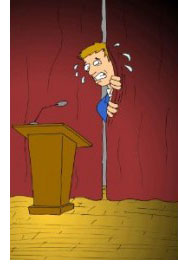 Studies have shown that one of the top fears people have is speaking to groups. For some people, when it comes to speaking, they'd rather be the one being eulogized than the person giving the eulogy! I've taught speaking skills to many people over the years and most people are nervous when they first get up to speak. They're worried about how they look, what others think of them, what if they forget what to say?
Even well-known celebrities have admitted fears of speaking in public. Barbra Streisand stopped singing for 20 years due to her anxiety about performing in front of an audience. Donny Osmond wrote a book about his life and his performance anxiety, and Sir Laurence Olivier recounted in his autobiography that he suffered a social phobia for five years.
How many times have you watched a speaker and thought, “I can do that!” And then that little inner critic in your head starts making noise and tells you, “Who am I kidding! I’m not a speaker… I can’t do this.” The more you think these thoughts, the more you believe it’s true. The truth is none of us was born a natural speaker.
When the little inner critic starts making noise, what you should be saying to that voice is, “Thanks for sharing!” Don’t let your inner critic sway you from staying in action mode. It’s in default mode trying to sabotage you with limiting thoughts and beliefs.
There’s nothing wrong with being a little nervous before you speak. In fact, a little bit of adrenalin is good because it keeps you alert, focused and energized as you speak.
Let’s take a look at 5 steps to help you overcome the fear of speaking:
- Visualize your success as a speaker. Spend a few minutes daily, several days before you deliver your talk, visualizing yourself giving a great presentation. Imagine the audience smiling as you speak and applauding at the end of your presentation. The more you can see yourself doing a great job speaking, the more real it will become for you.
- Know the first 3 minutes of your talk. Most speakers are most nervous at the beginning of their talk. There are a lot of things happening in those first three minutes. Your adrenalin is flowing and you want to deliver a great presentation. Make sure to be well prepared by rehearsing those first three minutes several times over so you know your material well. Once you get through those first three minutes, you’ll feel more connected to the audience and begin to relax.
- Connect with the audience. Look directly at people as you speak for no more than 4-5 seconds. You want to feel the energy of the audience and they want to feel your energy too. This will help to calm your nerves and keeps the audience paying attention to what you say.
- Meet with the audience before your talk. Many new speakers say they feel most nervous at the beginning of their talk when they first look out at the audience. It’s understandable to feel most vulnerable when you’re speaking to a group of people you don’t know. An easy way to break the ice with the audience is to arrive and mingle before your talk. Understand the audience is on your side. They came to hear what you have to say and want you to win!
- Focus on the audience. Your job as a speaker is to deliver value to your audience. With the initial nervousness that many new speakers experience, it’s easy to make it about yourself having thoughts like… “Will they like me? Am I doing a good job? What if I fail?” Put these thoughts aside and be out there with the audience. Focus on your message and the difference you’re there to make for them!
Subscribe to:
Posts (Atom)

 Posts

